
How to Choose the Right Metal for Staircase Railings
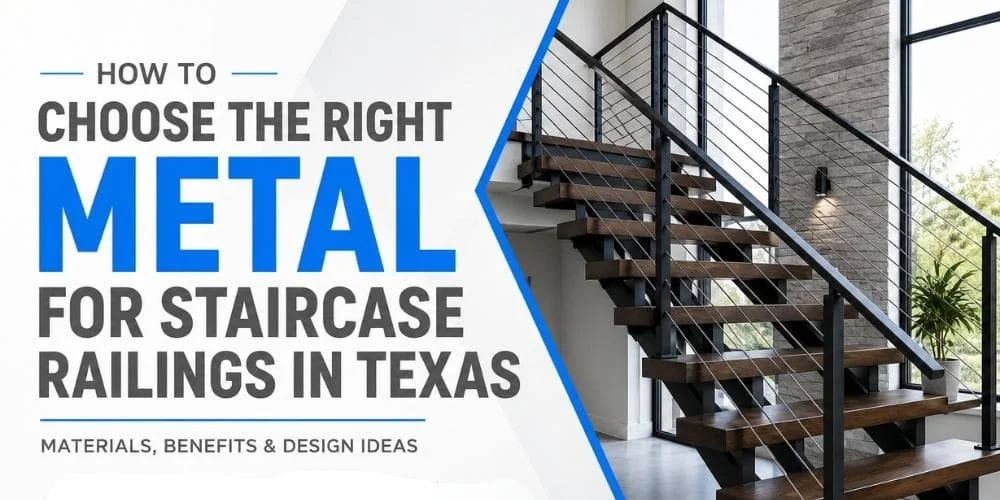
Choosing the right metal for staircase railings is about more than appearance—it's a long-term investment in your property's safety, durability, and style. The material you select directly affects the railing's strength, maintenance requirements, resistance to corrosion, and overall lifespan. Whether you're designing a new staircase or upgrading an existing one, selecting the wrong material can lead to frequent repairs, higher maintenance costs, and reduced long-term value.
With several options available, including steel, stainless steel, wrought iron, and aluminum, choosing the best material can seem overwhelming. Each offers unique advantages depending on your property's design, installation location, budget, and maintenance expectations.
This guide compares the most popular metal staircase railing materials, explains their strengths and limitations, and helps you choose the right option based on your property's style, location, maintenance preferences, and budget.
Why Choosing the Right Metal Matters
Staircase railings do much more than provide a handhold. The material you choose affects how your railing performs over time, how much maintenance it requires, and how well it complements your property's design.
A properly selected metal railing can provide years of reliable performance while improving both safety and appearance.
Choosing the right metal offers several practical and long-term benefits, including:
Improves safety and structural support
Increases durability and long-term performance
Resists rust, corrosion, and weather exposure
Reduces maintenance requirements
Complements your property's architectural style
Adds value to residential and commercial properties
Selecting the right material from the beginning can help you avoid unnecessary repairs and replacement costs in the future.
How to Choose the Right Metal
Before comparing different metals, it's important to evaluate the factors that will influence your decision. The installation location, local climate, maintenance expectations, design preferences, and budget all play a role in determining which material will provide the best combination of durability, functionality, and visual appeal.
Indoor vs. Outdoor: Indoor railings focus on aesthetics, while outdoor railings must withstand moisture, UV exposure, and temperature changes.
Climate: Coastal and humid environments are best suited to aluminum or marine-grade stainless steel. Powder-coated steel performs well in drier climates.
Maintenance Level: Stainless steel and powder-coated aluminum require the least maintenance.
Aesthetics: Sleek cable railing systems often use stainless steel frames, while ornate wrought iron complements traditional architecture. Modern steel railings suit contemporary and industrial-style properties.
Metal Staircase Railing Comparison
| Material | Durability | Maintenance | Corrosion Resistance | Lifespan | Best For |
|---|---|---|---|---|---|
| Steel | High | Medium | Good (when coated) | 20–40 Years | Residential and commercial staircases |
| Stainless Steel | High | Low | Excellent | 25+ Years | Modern homes and outdoor applications |
| Wrought Iron | High | Medium | Moderate | Several decades | Traditional and decorative staircases |
| Aluminum | Medium | Low | Excellent | 20+ Years | Outdoor staircases, balconies, and decks |
Comparing materials side by side can help property owners identify the option that best matches their needs and expectations.
The following sections explore each material in more detail, highlighting where it performs best, its key advantages, and important considerations before making a decision.
Common Metals Used for Staircase Railings
Stainless Steel:
Best for: Modern aesthetics and maximum corrosion resistance.
Pros: Highly durable, requires very little maintenance, and offers excellent resistance to rust and corrosion (especially if you choose Grade 316 for outdoors).
Cons: Typically has a higher upfront cost than other railing materials.
Aluminum:
Best for: High-humidity, outdoor, or coastal environments.
Pros: Naturally rust-proof, lightweight, and typically easier to install.
Cons: Softer than steel, meaning it can be more prone to scratches and dents.
Steel (Carbon Steel/Mild Steel):
Best for: Interior, high-traffic commercial or residential settings needing heavy-duty structural strength.
Pros: Highly versatile, cost-effective, and can be forged into many shapes.
Cons: Can rust if exposed to the elements, requiring protective powder-coating or paint.
Wrought Iron:
Best for: Classic, traditional, and highly ornate or decorative designs.
Pros: Extremely strong and visually striking.
Cons: Traditional wrought iron can rust and requires routine maintenance and painting, though modern metallized treatments have greatly reduced this upkeep.
Best Metal for Indoor Staircase Railings
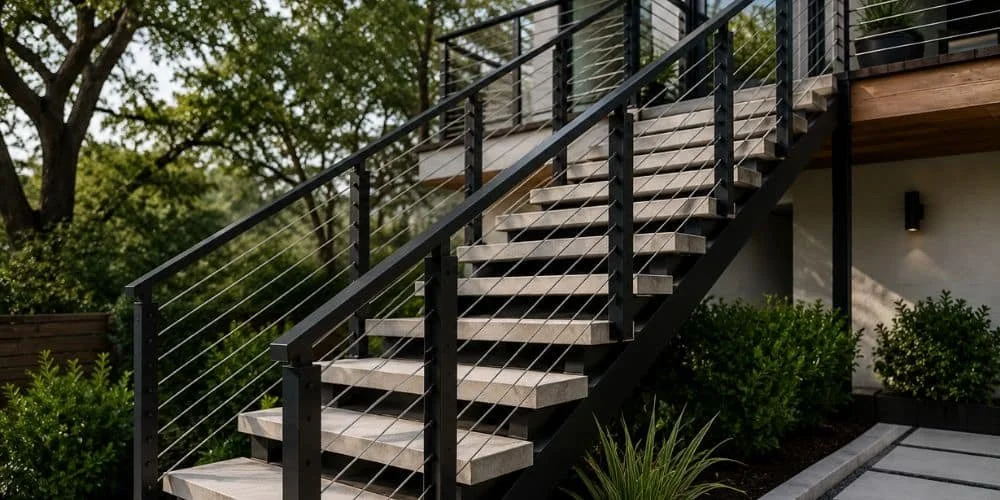
Indoor staircase railings are protected from harsh weather, allowing homeowners to focus on style, durability, and functionality.
Steel is one of the most popular choices for indoor staircases because it combines exceptional strength with modern design flexibility. It pairs well with floating staircases, wood treads, and contemporary interiors.
Wrought iron is ideal for traditional and decorative homes, adding elegance and character through ornamental detailing.
Stainless steel is another excellent option for modern interiors, offering a sleek appearance with minimal maintenance.
When selecting an indoor railing material, consider:
Architectural style
Expected foot traffic
Maintenance preferences
Budget
Safety requirements
Choosing a material that complements your interior design helps create a cohesive and attractive living space.
Steel and stainless steel are among the most popular indoor options because they combine durability with design flexibility, making them suitable for both modern and traditional interiors.
Best Metal for Outdoor Staircase Railings
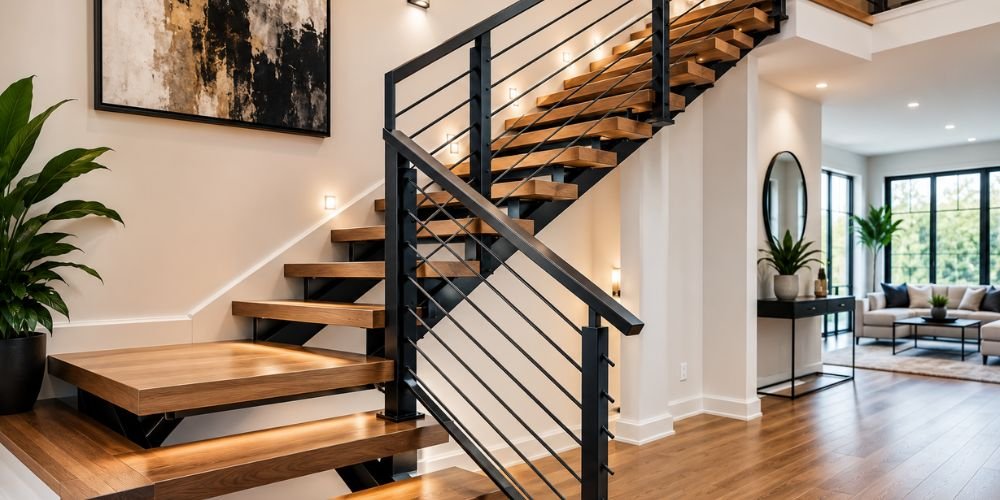
Outdoor staircase railings face constant exposure to sunlight, rain, humidity, and changing temperatures. Selecting a weather-resistant material is essential for long-term durability.
Stainless steel is one of the best outdoor options because it naturally resists corrosion and requires very little maintenance.
Aluminum is another excellent choice due to its lightweight construction and natural resistance to rust.
Steel also performs exceptionally well outdoors when protected with galvanization or powder coating, making it a cost-effective option for many properties. If you're considering galvanized steel for exterior stairs, read our guide on the benefits, uses, and maintenance of galvanized steel staircases to learn how this protective finish improves durability and corrosion resistance.
Although wrought iron can be used outdoors, it generally requires more frequent maintenance to prevent rust and preserve its appearance.
Choosing the right material for outdoor conditions helps reduce maintenance costs and extend the lifespan of your staircase railing.
If your property is located in a humid or coastal environment, stainless steel and aluminum generally provide the best long-term resistance to corrosion and weather-related damage.
Factors to Consider When Choosing Metal Staircase Railings
Before making a final decision, evaluate the following factors to ensure you select the best material for your property.
Durability
Choose a material capable of withstanding daily use without compromising structural integrity.
Rust and Corrosion Resistance
Outdoor railings should be able to withstand moisture, humidity, and changing weather conditions.
Maintenance Requirements
Some materials require periodic cleaning and protective coatings, while others need very little maintenance.
Design Style
Your railing should complement the architectural style of your home or commercial property.
Budget
Balance upfront costs with long-term maintenance and replacement expenses.
Installation Location
Indoor and outdoor environments have different performance requirements, making material selection especially important.
Considering these factors helps ensure your staircase railing delivers long-term safety, durability, and visual appeal.
How Long Do Metal Staircase Railings Last?
The lifespan of a metal staircase railing depends on the material, installation quality, environmental conditions, and ongoing maintenance. Regular maintenance, proper installation, and protective finishes can significantly extend the lifespan of any metal staircase railing, making it a worthwhile long-term investment.
Typical lifespans include:
Steel: 20–40 years with proper protective coatings and regular maintenance.
Stainless Steel: 25 years or more with minimal maintenance.
Wrought Iron: Several decades when properly maintained and protected from rust.
Aluminum: 20 years or more due to its natural corrosion resistance.
Routine inspections, cleaning, and timely repairs can significantly extend the life of any metal railing system.
How to Maintain Metal Staircase Railings
Proper maintenance helps preserve the appearance, strength, and safety of your staircase railing.
Steel Railings
Clean regularly with mild soap and water.
Inspect for scratches or damaged coatings.
Touch up paint or powder coating if needed.
Remove signs of rust before they spread.
Stainless Steel Railings
Wipe with a soft cloth and mild cleaner.
Remove fingerprints and water spots regularly.
Avoid abrasive cleaning products.
Wrought Iron Railings
Inspect periodically for rust.
Repaint or refinish when protective coatings wear away.
Keep decorative details clean to prevent moisture buildup.
Aluminum Railings
Wash occasionally with water and mild detergent.
Inspect hardware and fasteners.
Remove dirt and debris from joints and corners.
Simple maintenance can help your railing remain safe, attractive, and functional for many years.
Which Metal Performs Best in Different Weather Conditions?
Steel
Performs well outdoors when protected with powder coating or galvanization, helping resist moisture and corrosion.
Stainless Steel
Offers excellent resistance to rust and humidity, making it ideal for coastal and high-moisture environments.
Aluminum
Naturally corrosiBeson-resistant and lightweight, making it an excellent choice for outdoor staircases and balconies.
Wrought Iron
Provides exceptional strength and classic appeal but requires regular maintenance and protective coatings to prevent rust.
Choosing a material that matches your local climate helps maximize durability, reduce maintenance, and extend the lifespan of your staircase railing.
Matching the Right Metal to Your Property Style
The material you choose should complement your property's overall design.
Modern Homes
Modern architecture often features clean lines and minimalist designs. Popular choices include:
Stainless steel railings
Black powder-coated steel railings
Cable railing systems
Glass and metal combinations
Traditional Homes
Traditional properties typically emphasize decorative craftsmanship.
Popular materials include:
Wrought iron railings
Ornamental metalwork
Decorative scroll designs
Industrial Designs
Industrial-style spaces commonly feature:
Steel railings
Exposed metal components
Functional, minimalist designs
Selecting a material that matches your property's architectural style creates a cohesive appearance and enhances curb appeal. If you're looking for inspiration before choosing a material, explore our collection of railing design ideas for every type of space to discover styles that complement both modern and traditional properties.
Benefits of Custom Metal Staircase Railings
Standard railing systems may not always provide the perfect fit or design for every property. Custom metal staircase railings allow homeowners and businesses to create a solution that matches their architectural style while meeting specific functional requirements.
Some of the key benefits of custom metal fabrication include:
Designed to fit unique staircase layouts
Wide range of styles, finishes, and colors
Improved structural strength and durability
Greater flexibility for modern or traditional designs
Enhanced property value and curb appeal
Professional craftsmanship tailored to your project
Whether you prefer modern steel railings, decorative wrought iron, or sleek stainless steel designs, custom fabrication ensures your staircase railing is both functional and visually appealing.
Common Mistakes to Avoid When Choosing Staircase Railings
Selecting the wrong railing material can lead to higher maintenance costs, reduced durability, and premature replacement.
Avoid these common mistakes:
Choosing based only on price instead of long-term value.
Ignoring local weather conditions and moisture exposure.
Selecting a material that doesn't match your property's architectural style.
Overlooking maintenance requirements.
Hiring inexperienced fabricators or installers.
Prioritizing appearance over safety and structural performance.
Taking time to compare materials, evaluate environmental conditions, and work with an experienced fabricator can help you avoid costly repairs and ensure your staircase railing performs well for many years.
Frequently Asked Questions
What is the strongest metal for staircase railings?
Steel is generally considered one of the strongest materials used for staircase railings and is widely used in residential and commercial applications.
Which metal railing requires the least maintenance?
Stainless steel and aluminum typically require the least maintenance because they offer strong resistance to corrosion.
Are metal staircase railings suitable for outdoor use?
Yes. Steel, stainless steel, wrought iron, and aluminum can all be used outdoors when properly finished and maintained.
Can metal staircase railings be customized?
Yes. Custom metal fabrication allows railings to be designed in various styles, patterns, finishes, and dimensions to suit specific project requirements.
How do I choose the right metal for staircase railings?
Consider durability, maintenance requirements, environmental conditions, appearance, and long-term performance when selecting a material.
Conclusion
Choosing the right metal for staircase railings depends on your property's style, maintenance preferences, budget, and installation environment. Steel, stainless steel, wrought iron, and aluminum each offer unique advantages, making it important to select the material that best meets your project's requirements and long-term goals.
At Elevate Fabricators, we design and fabricate custom metal staircase railings that combine durability, safety, and modern craftsmanship for residential and commercial properties across Texas. Contact Elevate Fabricators today to discuss a custom railing solution built to enhance your property's style and lasting value.
