
Why Choose Galvanized Steel for Staircases? Benefits, Uses & Maintenance

Staircases go through more stress than most structural elements in a building. Daily foot traffic, moisture exposure, changing weather conditions, and long-term wear can all affect their durability and performance over time.
Choosing the right material is not just about appearance. It is also about strength, corrosion resistance, safety, and long-term maintenance costs.
This is why galvanized steel staircases have become a popular choice for residential, commercial, and industrial applications. Their protective zinc coating helps prevent rust and corrosion, making them ideal for outdoor staircases, industrial facilities, warehouses, fire escapes, and high-traffic environments.
Compared to materials like wood or concrete, galvanized steel offers better durability, lower maintenance, and longer service life in harsh conditions. It provides a strong, weather-resistant, and cost-effective solution for modern staircase construction.
Why Choose Galvanized Steel for Staircases?
Galvanized steel staircases are preferred because they offer strong corrosion resistance, long lifespan, low maintenance, and high structural strength. These features make them ideal for outdoor, industrial, and high-traffic environments.
It resists rust, handles heavy use, and doesn’t require constant maintenance. Whether the staircase is indoors, outdoors, or in an industrial setting, galvanized steel performs consistently over time.
This makes it one of the most reliable materials for long-term staircase performance.
What Is Galvanized Steel?
Galvanized steel is regular steel that has been coated with a layer of zinc. This coating acts as a protective shield, preventing moisture and air from reaching the steel underneath.
Since rust forms when steel reacts with moisture and oxygen, this protective layer helps stop corrosion before it begins.
Types of Galvanization
Different galvanization methods are used based on durability and application needs.
Hot-Dip Galvanizing
In this process, steel is submerged in molten zinc, creating a thick and durable coating that bonds with the metal surface.
Ideal for outdoor and industrial environments
Provides long-lasting corrosion protection
Commonly used for staircases, railings, and structural components
Electro-Galvanizing
Zinc is applied using an electrical current, resulting in a thinner and smoother coating.
Offers a cleaner and more uniform finish
Suitable for indoor or decorative applications
Provides moderate corrosion resistance
Pre-Galvanizing
Steel components are galvanized before fabrication, often used in large-scale manufacturing.
Cost-effective for mass production
Ensures consistent coating thickness
May require additional protection at cut or welded edges
These processes enhance durability and extend the lifespan of steel in harsh and demanding environments.
What Is Galvanized Steel Used For?
Galvanized steel is used in a wide range of applications because it performs well in tough conditions.
Common Galvanized Steel Uses
Staircases and railings for residential and industrial projects
Structural frameworks in buildings and warehouses
Bridges and walkways exposed to heavy loads
Fencing and gates for security and durability
Industrial platforms and ladders for high-traffic use
Why It’s So Widely Used
There’s a reason galvanized steel is used across so many industries:
It handles outdoor exposure without rusting quickly
It reduces maintenance needs over time
It stays strong under heavy loads
It works for both residential and industrial projects
Because of this, it’s often the go-to choice when long-term performance matters.
Types of Staircases That Use Galvanized Steel
One of the biggest advantages of galvanized steel is its flexibility. It can be used in different staircase designs without compromising strength.
Many modern staircase systems are also combined with custom railings to improve both safety and appearance. Explore modern railing ideas for staircases and balconies.
Common Types of Stairs
Straight Staircases
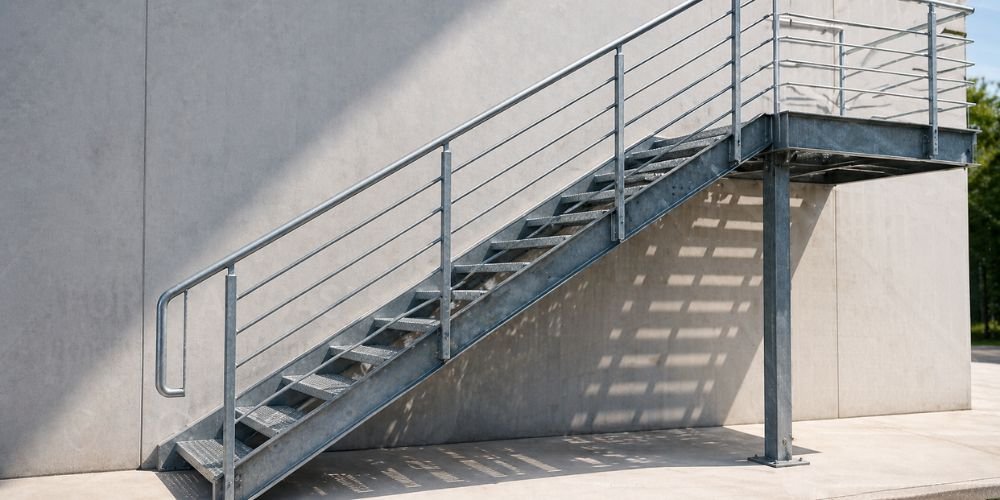
The most common type with a simple linear design. They are easy to install, cost-effective, and widely used in residential and commercial spaces.
Spiral Staircases
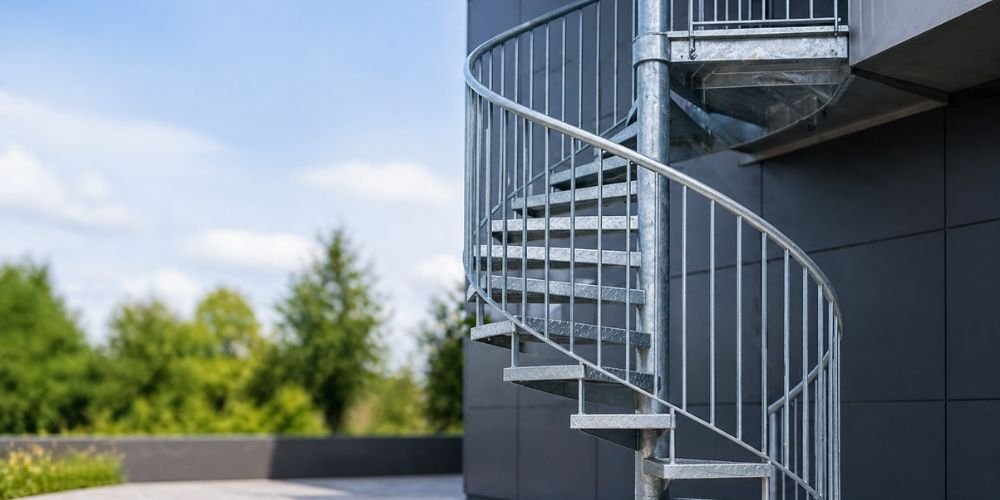
Designed in a circular shape, these stairs are ideal for compact areas. They save space while maintaining functionality, especially in outdoor settings.
Floating Stairs
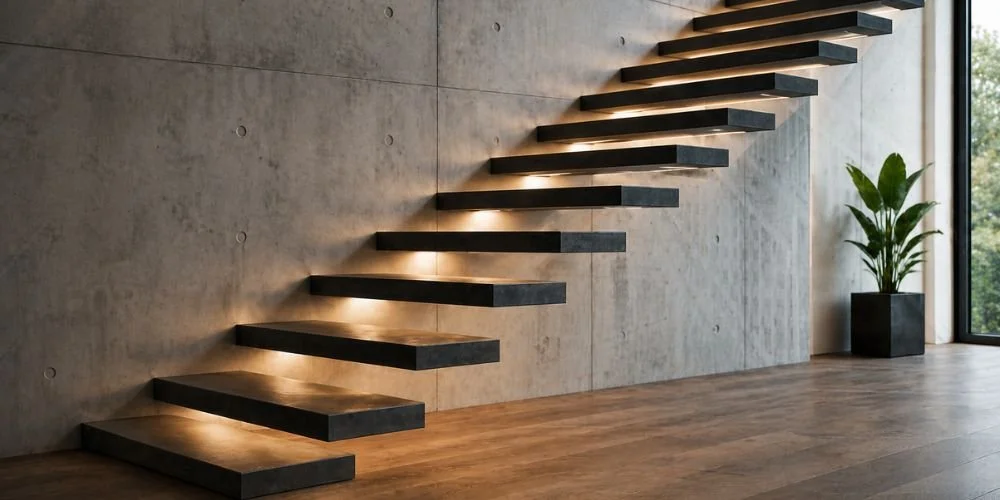
Modern and minimal in appearance, floating stairs create a sleek look. Steel provides the hidden support needed for strength and stability.
Industrial Platform Stairs
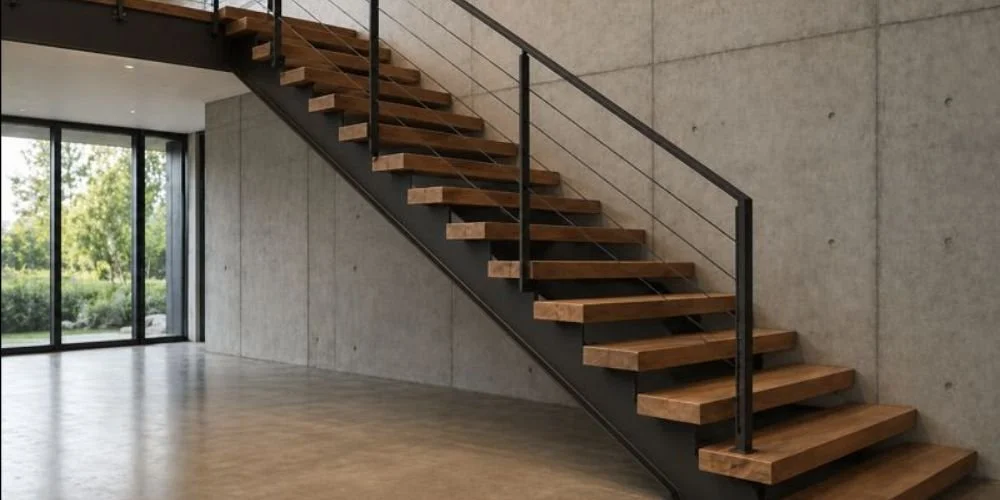
Built for heavy-duty use in factories and warehouses, these stairs are designed to handle high loads and constant traffic.
Fire Escape Staircases
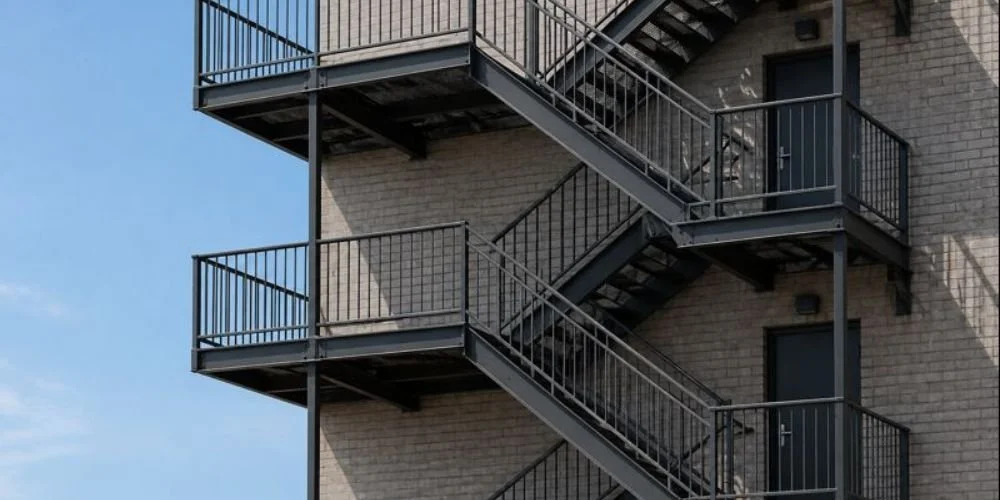
Used for emergency exits, these stairs must be strong and reliable. Galvanized steel ensures durability and resistance to weather conditions.
Why Galvanized Steel Works So Well
Supports heavy loads without bending
Maintains stability with constant use
Resists weather, moisture, and wear
Allows customization into different designs
Lasts for decades with minimal issues
Key Benefits of Galvanized Steel Staircases
When you break it down, the benefits are what make this material stand out.
1. Corrosion Resistance
The zinc coating protects steel from rust by blocking moisture and environmental exposure. It also provides sacrificial protection, ensuring long-lasting performance even in harsh conditions.
If you want to understand how galvanized steel performs compared to stainless steel in different environments, check out this detailed guide: Read the full comparison guide on galvanized steel vs stainless steel.
2. Long Lifespan
Galvanized steel staircases can last 50 to 100 years, depending on environmental conditions, reducing the need for frequent replacements.
3. Low Maintenance
Unlike painted or untreated steel, galvanized steel requires minimal upkeep. Occasional cleaning and inspection are usually sufficient to maintain its condition.
4. High Strength and Durability
Steel offers excellent load-bearing capacity and can withstand heavy use, making it suitable for industrial, commercial, and residential applications.
5. Cost-Effective Solution
Lower maintenance and repair costs make galvanized steel more economical over time compared to other materials.
6. Sustainability
Galvanized steel is recyclable and has a long lifecycle, reducing environmental impact and supporting sustainable construction practices.
How It Compares to Other Materials
Before choosing a material, it helps to see how it stacks up.
Galvanized Steel vs Stainless Steel
Galvanized Steel vs Concrete
Galvanized Steel vs Wood
Where Galvanized Steel Staircases Are Used
You’ll find these staircases in a variety of settings:
Industrial Applications
Factories and warehouses
Manufacturing facilities
Power plants
Commercial Applications
Office buildings
Shopping complexes
Parking structures
Residential Applications
Outdoor staircases
Balcony and terrace access
Garden and landscape stairs
Are There Any Downsides?
Like any material, galvanized steel isn’t perfect.
It has a more industrial appearance
It can be slippery without proper finishing
The coating can wear down over time in extreme conditions
Scratches may need attention
Still, for most applications, the benefits outweigh these limitations.
Galvanized Steel Maintenance Guide
The good news is maintenance is simple.
Basic Care
Clean with water and mild detergent
Remove dirt and buildup regularly
Inspections
Check for scratches or damage
Inspect joints and connections
Long-Term Care
Recoat damaged areas if needed
Avoid harsh chemicals
A little care goes a long way in extending its lifespan.
If surface corrosion starts to appear over time, proper maintenance can help extend the lifespan of steel structures. Learn how to remove rust from metal surfaces with this complete guide.
How Long Do Galvanized Steel Staircases Last?
The lifespan depends on where the staircase is installed:
Rural areas: up to 100 years
Urban areas: around 40–70 years
Coastal areas: 20–50 years
With proper maintenance, it can last even longer.
When Should You Choose Galvanized Steel?
It’s the right choice when:
The staircase is exposed to outdoor conditions
You want long-term durability
Maintenance needs to stay low
Strength and reliability are priorities
Choosing the right staircase material early can reduce long-term costs, improve durability, and ensure better structural performance.
Conclusion
Galvanized steel staircases continue to be one of the most reliable solutions for residential, commercial, and industrial projects because they offer excellent durability, corrosion resistance, low maintenance, and long-term structural performance.
Whether used for outdoor staircases, industrial platforms, fire escapes, or modern architectural designs, galvanized steel provides a strong and weather-resistant solution that performs well in demanding environments. Its long lifespan and low maintenance requirements make it a practical and cost-effective choice for long-term staircase construction.
For projects that require quality fabrication and dependable performance, Elevate Fabricators delivers custom galvanized steel staircases designed for strength, functionality, and durability.
FAQs
Are galvanized steel staircases slippery?
Galvanized steel staircases can become slippery when wet, but anti-slip treads, grated steps, and textured finishes help improve safety and traction.
Can galvanized steel stairs rust over time?
Yes, galvanized steel can rust over time, especially in harsh environments, but the zinc coating provides strong corrosion resistance and greatly slows the rusting process.
How long does galvanized coating last outdoors?
Galvanized coating can last 20 to 100 years outdoors depending on environmental conditions such as moisture, pollution, and salt exposure.
Are galvanized steel stairs expensive?
Galvanized steel stairs are considered cost-effective because they offer long-term durability, low maintenance, and reduced repair costs compared to many other materials.
Can galvanized steel be painted?
Yes, galvanized steel can be painted with proper surface preparation and compatible primers to improve appearance and additional protection.
Are galvanized steel stairs good for coastal areas?
Yes, galvanized steel stairs perform well in coastal areas due to their corrosion resistance, although regular maintenance helps extend their lifespan in salty environments.
What industries use galvanized steel stairs?
Galvanized steel stairs are commonly used in warehouses, factories, commercial buildings, manufacturing plants, construction sites, and residential outdoor projects because of their durability and strength.
